


Disclosure: This post includes affiliate links. As an Amazon Associate, we earn from qualifying purchases (at no extra cost to you), allowing us to continue sharing helpful, valuable, and supportive resources.
You don’t need a forest, a mountain, or a weekend retreat. You just need a few quiet minutes and the willingness to look up and connect with nature.
City life can pull you in a dozen different directions at once. Between the hum of the refrigerator and the glow of our screens, we often forget that we are biological creatures meant to connect with nature. For those of us living in the heart of a city, the “great outdoors” can feel like a distant destination rather than a daily reality.
But here is the truth that nobody really talks about: nature has not gone anywhere. It is still right there, in the tree outside your window, in the smell of the air after rain, in that sliver of blue sky between two buildings on your walk to the subway. It has been waiting patiently for you to notice it again.
We are not talking about hiking trails or weekend escapes. We are talking about something smaller, quieter, and honestly far more sustainable, little rituals you can slip into the life you already have, in the city you already live in.
And there is real science behind that feeling. Researchers at the University of Michigan found that just 20 minutes in a natural setting, even a city park, can measurably lower cortisol, the hormone most tied to stress and burnout. Twenty minutes. That is one podcast episode. That is the time most of us spend scrolling before we even get out of bed.
What if you used those 20 minutes differently?
What We’ll Explore Together
Why Nature in the City Matters
The Myth of the “Real” Outdoors
Somewhere along the way, most of us picked up a quiet belief that nature only counts when it is grand. A national park. A waterfall you have to hike to reach. A cabin with no cell service and a crackling fire. Anything less, the thinking goes, is just scenery.
But that idea, as comforting as it sounds, gently cuts us off from what is always within reach.
Even in the most concrete-packed cities, nature is pushing through. Moss claiming the gaps between paving stones. A red-tailed hawk circling above the financial district. A ginkgo tree, one of the oldest species on the planet, is standing quietly outside the dry cleaner on your street. These moments help us remember that we were never truly separate from the natural world. We are part of it. We have always been part of it. The city just makes it easier to forget.
A Shared Human Truth: Every Culture Has Always Known This
The idea of stepping outside to heal, to breathe, to feel like yourself again, and to connect with nature isn’t new at all. It’s something countless traditions around the world have echoed for thousands of years. Different cultures, in completely different places, speaking completely different languages, all arrived at the same quiet truth: we are not separate from nature. We’re shaped by it, supported by it, and restored by it. They each have their own word for it, their own rituals, their own stories — but the philosophy is the same.
Ubuntu — Southern Africa

Take Southern Africa and the philosophy of Ubuntu. You may have heard the phrase before, “I am because we are.” But Ubuntu goes deeper than the human community. It extends that sense of belonging outward, into the natural living world around us. The Zulu and Xhosa peoples understood that a person cannot truly be well in isolation — not from other people, and not from the natural world either.
Dagara Healing — Western Africa

Dagara wisdom from West Africa offers another way of seeing our place in the world — one that feels simple, natural, and deeply human. It teaches that we’re connected to the elements around us: Fire, Water, Earth, Mineral, and Nature. Healing isn’t something that happens apart from these forces. It happens with them.
Image Credit: Malidoma Patrice Somé
Chahar Bagh — Ancient Persia
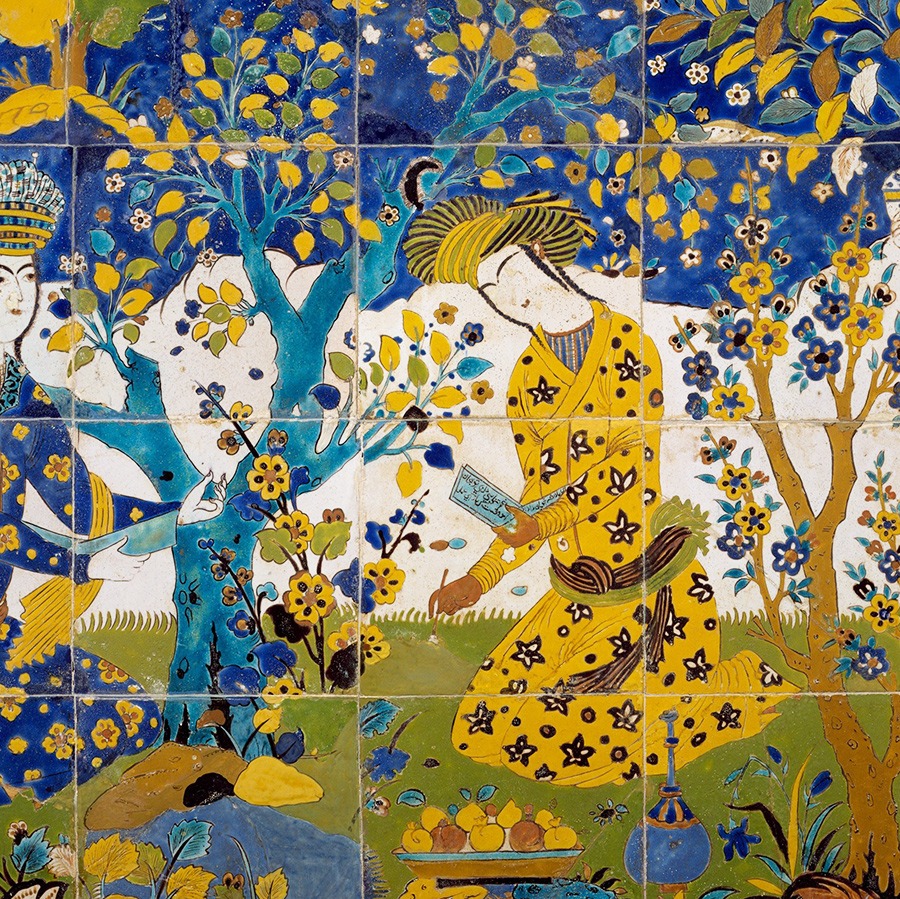
More than 2,500 years ago, in what is now Iran, the Persians were creating walled garden sanctuaries called Chahar Bagh. These were peaceful spaces with shaded walkways, flowing water channels, fragrant trees, and quiet corners designed for one purpose, giving a tired mind a place to simply rest and connect with nature.
Ayni — The Andes

In the highlands of the Andes, the Quechua and other Indigenous peoples have long lived by a simple, beautiful principle called Ayni — sacred reciprocity. It’s the understanding that the earth gives to us every single day, quietly and without conditions. So we give something back. A moment of gratitude. A seed planted with intention. A few minutes of genuine attention. Not as a transaction, but as a relationship. The Andean peoples never saw themselves as owners of the natural world. They saw themselves as part of an ongoing conversation with it, one that’s alive, responsive, and deeply mutual.
The Universal Truth
What’s beautiful about all of this isn’t just that these traditions exist, it’s that they appear everywhere. Africa. Asia. America. Cultures separated by oceans and centuries, all arriving at the same quiet truth: we all need to connect with nature.
Not as a luxury or perk. Not as a reward for finishing our work. As a daily, ordinary, essential part of being human. We haven’t lost that need to connect with nature. We’ve simply gotten busy. And the comforting thing is that nature is incredibly patient. It has been waiting for us to come back. It’s still waiting right now.
The 7 Simple Outdoor Rituals You Can Start Today
None of these will ask much of you. They’re not programs or routines or 30‑day challenges. Think of them as small, open invitations — gentle nudges toward moments that are already around you, just waiting to be noticed.
1. The One‑Minute Sky Pause
Before you reach for your phone in the morning, try this instead: look at the sky. Step outside for 60 seconds, or lean out an open window, and just watch. The color of the light. The shape of the clouds. The way the air feels on your face. Looking up widens your perspective and softens tension you didn’t realize you were holding. And more importantly, it really helps you connect with nature.
2. The One-Tree Meditation
Find one tree near where you live or work. It does not have to be beautiful or impressive. It just has to exist. Once a day, or even just once a week, spend five minutes near it. Notice what has changed since the last time you looked at it.
How the light is falling on its branches. Whether new leaves have come in. What small creatures are using it as a home. Over time, something interesting happens. You start to feel a genuine bond with the tree in a quiet, unspoken way.
3. A Slow Walk to Engage Your Senses
Leave the earbuds out just this once. On your next walk, even a short one to the corner store, try engaging all five senses with intention. What sounds are layered underneath the traffic? What can you smell? What textures are under your feet? How does the air feel different in the shade versus the sun?
Do the best you can to resist filling the silence. Just let the walk be a walk. What you will often discover is that the world around you is far more interesting, and far more soothing, than you expected.
4. The Ground‑Under‑Your‑Feet Check
Wherever you are, pause for a moment and feel the ground beneath you. Notice its texture: the firmness of concrete, the softness of grass, the unevenness of old brick, the warmth or coolness rising through your shoes. Let your weight settle downward, as if the earth is quietly saying, I’ve got you.
This tiny act pulls you out of your thoughts and back into your body. It reminds you that stability doesn’t always come from your mind; sometimes it comes from the simple fact that something solid is supporting you.
5. The Rain Ritual
Most of us have a complicated relationship with rain. We check the forecast with mild dread, we curse the timing, we sprint between doorways trying to stay dry. But try this sometime. The next time it rains, step outside, even just under an awning or a door frame, and simply listen. Rain has its own rhythm. It cleans the air. It transforms the smell of everything around it. It softens the city in a way that almost nothing else can.
6. The Water Reset
Water has a way of clearing mental static. You don’t need a river or a lake — any source of water will do. Find a fountain, a sink, a bottle, a puddle. Dip your fingers in and feel the coolness. Let that sensation bring you back into your body. Take one slow breath as you do it. It’s a small, physical reset, a way of rinsing off whatever has been clinging to you emotionally or mentally.
7. The Beauty Spot
Beauty is one of the quickest ways to appreciate your place in the world. Choose one small thing outside, a flower, a shadow, a pattern in the sidewalk, the way light hits a window, and let yourself admire it for five seconds. No analysis. No meaning. Just appreciation. This ritual trains your attention to notice what is gentle, lovely, or surprising in the world around you. Over time, it becomes easier to find beauty even on difficult days.
The Science of Why This Works
We know what you might be thinking. This all sounds lovely, but does it actually do anything? Fair question. And the answer, it turns out, is a pretty convincing yes. Here is why it works:
- A major study in the Proceedings of the National Academy of Sciences found that a 90‑minute walk in nature reduces activity in the part of the brain linked to rumination — the repetitive, anxious thinking many people struggle with. In other words, time outside quiets the inner critic, not through medication or drastic life changes, but through something as simple as a walk.
- The field of ecotherapy is growing, with more therapists recommending nature as a meaningful part of emotional healing and ongoing mental well‑being.
- These findings point to a deeper truth: our minds and bodies were shaped by natural environments, not by offices, apartments, or screens.
Nature isn’t a luxury or a reward — it’s closer to a basic human need, one our bodies still recognize even when our schedules don’t.
A Final Thought to Carry With You
You don’t need a new lifestyle to feel more connected to nature. You just need a starting point. One tree. One sky. One moment of looking up before you check your phone. Work with whatever time you have. Nature isn’t judging. It’s ready whenever you are.
If this resonated with you:
- Pick one ritual and try it today for five minutes. Notice what changes.
- Explore next: What Is Spirituality? 5 Simple Ways to Feel Calm, Connected, and at Peace
- And as always, don’t forget to S.U.N (Stay Uplifted Naturally)!
Disclosure:
Some of the links in this article are Amazon Affiliate links, meaning we may earn a small commission if you make a purchase through these links, at no extra cost to you. We only recommend books and products that we believe can make a positive difference in your everyday life, and we truly appreciate your support in making our work possible. Thanks so much for supporting our work! And as always, Stay Uplifted Naturally!
Disclaimer:
Welcome to S.U.N! Just a quick note: we’re here to share helpful information, but we’re not a replacement for medical, legal, or other professional advice. Our content is meant to support you, not take the place of medical or mental health treatment. If you think you might have a condition, please see a professional. And as always, Stay Uplifted Naturally!