

7 Foundations for Understanding Your Son That Help Him Grow with Character, Confidence, and Emotional Intelligence

Disclosure: This post includes affiliate links. As an Amazon Associate, we earn from qualifying purchases (at no extra cost to you), allowing us to continue sharing helpful, valuable, and supportive resources.
Understanding your son begins with slowing down enough to see the world through his eyes — noticing what shapes him, what steadies him, and what helps him grow with confidence and heart.
There’s a quiet moment in every parent’s life when you look at your son and wonder what’s happening inside him. It’s such a simple question, yet it opens the door to something deeper — a way of seeing him that strengthens his mental and emotional well‑being in ways he may not yet have words for.
Understanding your son isn’t just a parenting skill. It’s a mental‑health necessity. When you take the time to understand him, you give him something essential: the feeling of being safe, seen, and supported. Those three experiences shape how boys grow — not just in childhood, but through adolescence and into adulthood.
And when you approach him with curiosity instead of urgency, something gentle begins to shift. You start to see the boy in front of you — not the one you fear, hope, or assume he is — but the one who’s trying, in his own way, to become himself. That shift invites you to slow down and meet him where he is, to understand the world he’s navigating rather than rushing to shape it for him.
When you see him this way, you begin to realize that boys aren’t projects to complete. They’re people to know.
In this Article
Foundation 1: Understanding Comes Before Action
Before you can guide your son, you have to understand him. Acting without understanding often leads to frustration for both of you. But when you pause long enough to see what’s happening inside him, something important shifts. He feels calmer, and you begin to understand what he needs from you in that moment. The relationship settles into a place where connection becomes possible again.
Understanding gives your son a sense of being known. When he feels understood, he relaxes. He opens up. He becomes more willing to share what’s on his mind and more receptive to the support you’re trying to offer. In those moments, growth — his and yours — becomes easier.
And the reassuring part is this: you don’t have to get it perfect. You just have to understand what he’s feeling before you decide what to do next. When you start from that place, your actions naturally become steadier and more aligned with what he actually needs.
Foundation 2: Understanding His Emotional World Clearly
Every boy carries an inner world that doesn’t always show on the outside. Some speak openly, some stay quiet, some move with confidence, and some hesitate. But beneath those differences, most boys share a simple truth: they want to feel understood. When a boy feels understood, he feels safer in himself and more connected to the people around him.
Boys need to feel safe enough to express what they’re feeling, even when they don’t have the words yet. They need to feel known in a way that tells them their emotions make sense. They need encouragement that helps them try again after a hard moment. They need guidance that doesn’t overwhelm them. And they need acceptance that stays steady even when they struggle.
These needs don’t disappear as boys grow older. They shift and expand as he moves through childhood, adolescence, and adulthood. What stays constant is the impact of being understood. When a boy feels seen for who he is, he becomes more open, more confident, and more connected to the people who care about him.
There is real joy in meeting these needs gently and consistently. It’s in these moments that a boy begins to trust not only you, but himself.
Foundation 3: Growing With Him Through Every Stage
A young boy needs presence — someone who sits with him, listens to him, and helps him make sense of his world. As he grows, he needs patience, especially when he’s learning how to handle big emotions or new challenges.
A teenage boy needs trust, the kind that gives him room to explore who he’s becoming while knowing you’re still there. And an adult son needs respect, a recognition that he’s building his own life and identity.
Through every stage, he needs someone who stays, and over time your relationship becomes a living thing — stretching, adapting, learning, and growing with him.
Foundation 4: Building Trust Through Everyday Moments
Trust grows in the small moments. It grows when you show up when he expects you. It grows when you repair after conflict instead of letting distance linger. It grows when you keep your word, even in simple things. It grows when you listen without judgment and stay steady when he’s overwhelmed.
Trust doesn’t come from perfection. It comes from consistency — the quiet kind that makes a boy feel safe enough to be himself.
Foundation 5: Communicating in Ways That Help Him Open Up
Boys communicate differently at different ages, and often in ways that don’t look obvious. A short answer might mean he’s unsure. A quiet pause might mean he’s thinking. Humor might be his way of checking whether it’s safe to share something real. Even a random question can be his way of asking for connection without saying it directly.
Communication becomes easier when you match his pace instead of pushing your own. When you slow down, listen closely, and stay curious, you begin to hear the feeling underneath his words — or his silence. That’s where connection grows.
Listening without rushing to solve is one of the most powerful things you can offer him. It shows him he’s capable. It shows him he’s respected. And it shows him he’s not alone in whatever he’s going through.
Foundation 6: Balancing Boundaries and Connection
Boys need boundaries that help them feel safe and connection that helps them feel loved. Boundaries teach responsibility. Connection teaches belonging. Together, they create a relationship that can grow through childhood, adolescence, and adulthood.
And this balance doesn’t have to be perfect. It just needs to be steady enough for him to feel held, guided, and understood as he moves through each stage of growing up.
When that steadiness is in place, it becomes the environment where his inner qualities start to take shape. One of those qualities is character, which grows through honesty, responsibility, kindness, courage, and self‑reflection. Another is confidence, which grows when a boy feels understood and supported.
And that same sense of support helps his identity grow as he’s given space to explore who he’s becoming — without pressure to already have it figured out.
And when you stay consistent in both boundaries and connection, he begins to trust himself — not just in who he is, but in who he’s becoming.
Foundation 7: Staying Grounded When Life Gets Complicated
Boys feel stress, anxiety, anger, and self‑doubt — even when they don’t show it. Stress may look like silence. Anxiety may look like resistance. Anger may look like independence. Self‑doubt may look like perfectionism.
Understanding these patterns helps you respond with compassion instead of confusion. It helps you see the need beneath the behavior — the part of him that’s asking for support without knowing how to say it.
Today’s boys also face pressures previous generations never knew. They navigate constant comparison, digital performance, social expectations, online friendships, and information overload. It’s a lot for a young mind to carry.
Your presence becomes a grounding force — a reminder that he’s more than the pressures he feels, online or offline. And when he feels that steadiness from you, your presence and connection becomes something he can rely on, even in a fast‑moving digital world.
The People Who Shape His World
As a son grows, these foundations don’t stand alone. They’re strengthened by the people who surround him — the ones who show up, stay steady, and help shape the world he grows into. A boy’s confidence, character, and emotional intelligence are built not only through your relationship with him, but through the circle of support that guides him as he becomes himself.
Not every boy grows up surrounded by many supportive adults. Some grow with a full circle, others with one steady, loving adult who shows up for them. What matters most isn’t the size of that circle — it’s the consistency of the connection. A single responsible, caring adult can give a boy the stability, guidance, and emotional safety he needs to grow with character, confidence, and emotional intelligence.
A Deeper Way to Understand Your Son
If you’d like a deeper, guided way to explore what understanding your son truly means — especially in the everyday moments that shape who he’s becoming — the resources below offer a simple, common‑sense path forward. No scientific jargon or pedantic, surface‑level advice here — just clear, logical guidance grounded in everyday wisdom that simply works.
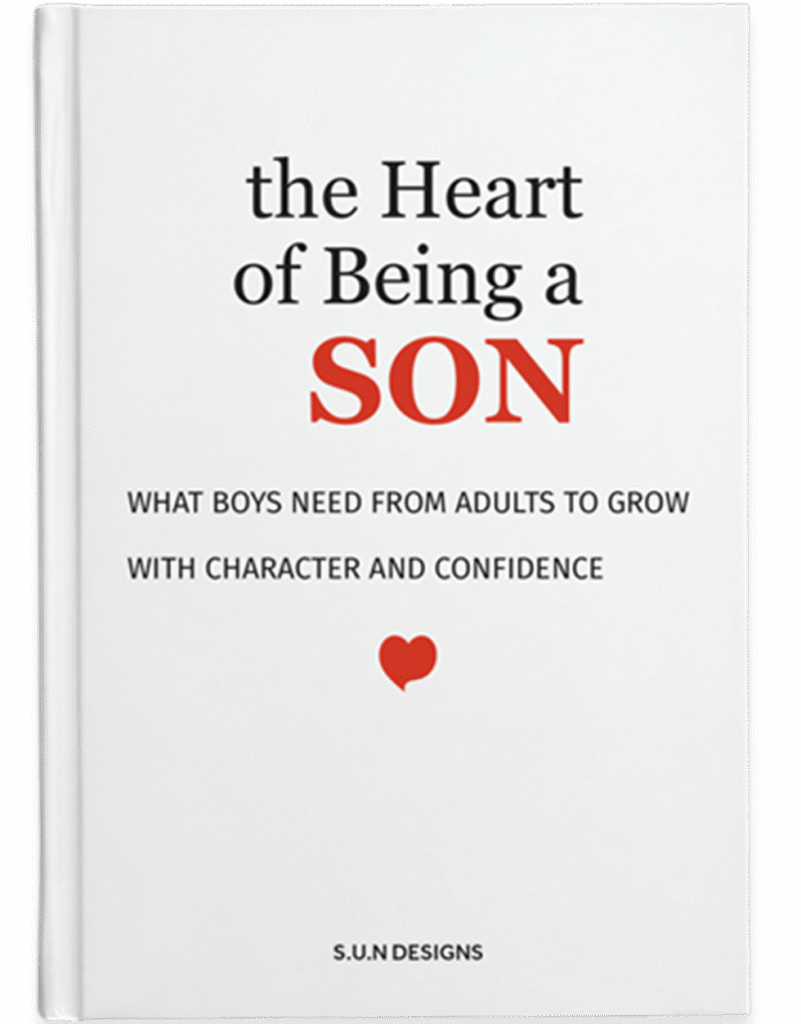
The Heart of Being a Son: What Boys Need From Adults to Grow with Character and Confidence #ad
Understanding your son is a journey — one that becomes clearer when you have a gentle, grounded resource beside you. The Heart of Being a Son was created for that purpose. It helps you see him more fully, connect with him more deeply, and support him with confidence as he grows.

Workbook for The Heart of Being a Son: An Interactive Guide For Adults Who Raise Boys From Childhood To Adulthood #ad
For those who want to turn understanding into everyday connection, The Workbook for The Heart of Being a Son provides thoughtful questions and simple exercises that help you bring these foundations into daily life. It turns understanding into action, and action into connection.
Let This Stay With You: Understanding Your Son Is a Lifelong Conversation
Understanding your son isn’t something you master once. It’s a conversation that grows as he grows — shaped by your presence, your patience, and the moments you choose to show up. Boys don’t become themselves overnight. They become themselves through steady relationships that teach them they are seen, valued, and worth showing up for.
You won’t get every moment right. No parent does. But when you stay curious about who he is, when you listen beneath the surface, when you offer safety instead of pressure, you give him something lasting: the confidence to grow into himself with honesty and heart.
Your son doesn’t need a perfect parent. He needs someone who listens, guides, supports, encourages, and stays. Someone willing to know him — not simply raise him.
For most sons, that’s enough.
For most sons, it’s everything.
Disclosure:
Some of the links in this article are Amazon Affiliate links, meaning we may earn a small commission if you make a purchase through these links, at no extra cost to you. We only recommend books and products that we believe can make a positive difference in your everyday life, and we truly appreciate your support in making our work possible. Thanks so much for supporting our work! And as always, Stay Uplifted Naturally!
Disclaimer:
Welcome to S.U.N! Just a quick note: we’re here to share helpful information, but we’re not a replacement for medical, legal, or other professional advice. Our content is meant to support you, not take the place of medical or mental health treatment. If you think you might have a condition, please see a professional. And as always, Stay Uplifted Naturally!